COMMISSARY, GHOST & SHARED KITCHENS · VIRGINIA
Shared kitchen, shared trap. Keep it pumped and logged.
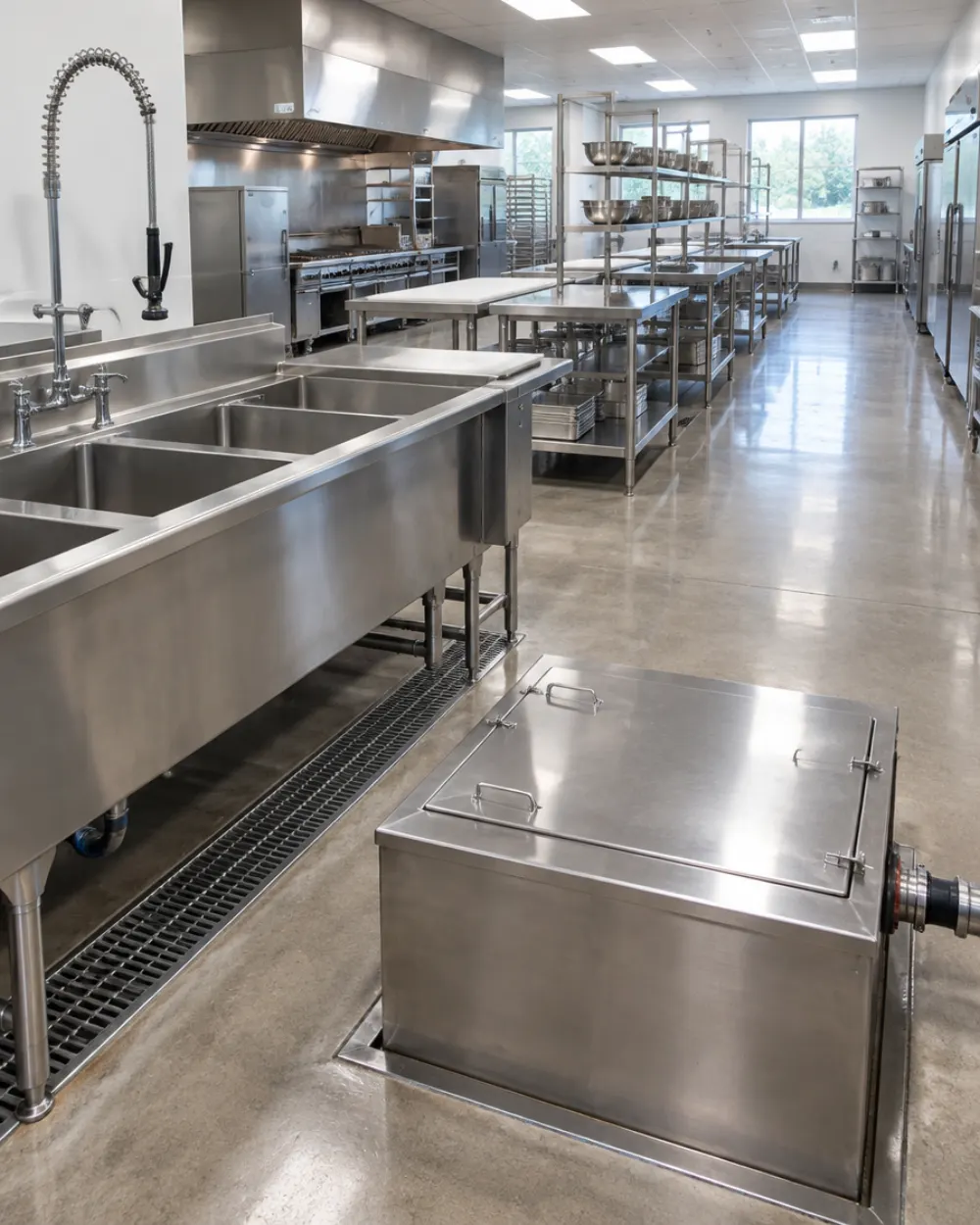
Your members, and any trucks that use your sink, can all feed one trap. Where we can place the job, you ask the operator for a service interval that fits the load, and you keep the signed records in one place. Free for kitchens; you pay only the operator you approve.
Free for kitchens · you pay only the operator you approve
- 1Jordan asks a few quick questions
- 2We check your area
- 3If we can place it, you review one proposal
- Operator network building region by region
- We request the operator’s record
- Free for kitchensyou pay only the operator you approve
- Guides for all of Virginia
WHO THIS IS FOR
Kitchens many businesses cook in.
Commissaries, shared-use and ghost kitchens, kitchen incubators and food-truck bases. The owner or kitchen manager is who we talk to.
Many members, one trap
Heavy shared use tends to fill a trap faster than one restaurant would. The pumping interval has to follow the load.
Truck wastewater and grease
If your members’ trucks use the commissary’s sink or trap, their waste lands in that trap.
Records for inspectors and members
Your health district and utility may ask. A trap log sits next to your truck-servicing log.
One person doing everything
You run a kitchen, not a pumping schedule. We match you with an operator and ask them for the signed record; you keep it.
HOW IT GETS DONE
Message to serviced, with the paper to show for it.
Message Jordan
Tell us about the trap: size if you know it, access, how many members and trucks use it, and when you need it done.
We match and confirm
If we can place your job in your area, we confirm scope, window and price with you. Nothing is booked until you approve a proposal.
Service done, keep the record
The operator pumps and cleans and signs the manifest. We ask the operator for the signed record.
Message Jordan → Free for kitchens · you pay only the operator you approve
Jordan · Dispatch assistant
Records for the shared trap
A log your inspector
and members can read.
When we place a job, we ask the operator for the signed manifest. Keep your own copy; whether a PDF comes with it is up to the operator.
- ✓A signed one-page manifest from the operator, for you to keep.
- ✓Volume removed and trap condition logged, with photos if anything is off.
- ✓A printable compliance binder, to keep those records in.
Shared-kitchen trap log
Sample only · not a real job
- Kitchen
- Sample Commissary · 1 Sample St, Richmond
- Device
- Shared grease trap (sample)
- Service
- Trap pump-out + interior clean
- Volume
- 1,000 gal · baffles intact
- Operator
- Sample Operator · A. Sample
- Next service
- Set by the operator and the local rule
WHAT YOUR COMMISSARY AGREEMENT SAYS
Grease disposal is on the form.
Health districts ask commissaries to confirm services for the mobile units they host. Three public examples:
| Source | What it says |
|---|---|
| Piedmont Health District | Lists sanitary disposal of wastewater and grease among the services the commissary provides; annual renewal required. Source ↗ |
| Fairfax County | Service checkboxes include “Waste grease removal.” Source ↗ |
| Chesapeake Health Department | Annual commissary agreement; services include “Grease Disposal.” Source ↗ |
How often the trap has to be pumped comes from your sewer utility, not the health department. Find your locality’s rule in the Virginia guides. Jordan can’t tell you what your city requires.
Trucks with fryer oil? We can coordinate used cooking oil pickup too. Terms for the oil are between the truck and the collector.
QUICK ANSWERS
Before you message Jordan.
We already have someone.
Good, keep them. If they ever stop showing up, message Jordan.
Are you the pumper?
No. We coordinate. Local operators who carry their own permits do the work and invoice you directly.
What does it cost?
Coordination costs your kitchen nothing. The operator gives you a written price before any work, and you decide.
Is this a health department thing?
No. We are not connected to the health department or the utility. Your commissary agreement lists grease disposal, and your utility sets the rule for the trap. We link it so you can read it yourself.
The trucks’ grease is not my problem.
If they dump at your sink or trap, it ends up in your trap, and the pump schedule has to allow for the trucks you host. Some commissaries have a separate dump station, in which case it does not. No blame; tell Jordan how many trucks use the sink.
My trap is small and the plumber cleans it.
That is fine for small traps where your utility allows it. If you ever outgrow it, ask Jordan.
Will my trucks get paid for their oil?
That is between the trucks and the collector. We can coordinate a pickup; we cannot promise terms.
Message Jordan → Free for kitchens · a few minutes
Get the shared trap matched with an operator.
One message. One proposal. Your approval. You keep the signed record.
Message Jordan →Free for kitchens · Takes a few minutes
- 1Jordan asks a few quick questions
- 2We check your area
- 3If we can place it, you review one proposal
Operator contracts with you and performs the work.